> For the complete documentation index, see [llms.txt](https://docs.akkio.com/akkio-docs/llms.txt). Markdown versions of documentation pages are available by appending `.md` to page URLs; this page is available as [Markdown](https://docs.akkio.com/akkio-docs/settings/team-settings.md).
# Team Settings
Your [Team Settings page](https://app.akk.io/team-settings) features your team information, including a team overview, members, and API keys. This page is accessible by clicking the “Settings” at the bottom left of the Akkio home page.
Team creation and management, however, is located at the top left of the Akkio home page.
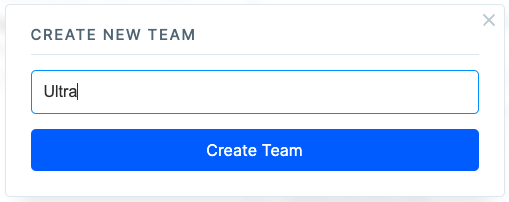
Create one by simply clicking “Create Team” in the above dropdown and giving it a name.
Creating a team makes it easy to manage members and their roles. You can have multiple Teams at once.
### **General**
The rest of your Team Settings will be located in the Settings page. Accessed at the bottom left of the Akkio home page.
Change your current Team's name, Delete your Team, or override your Organization's White Labeling with a unique one for your Team. More details on [White Labeling](https://docs.akkio.com/akkio-docs/settings/organization-settings#white-labeling) under Organization Settings.
.png?alt=media\&token=85797214-825d-4e0c-b35b-b1a05b046d69)
### **Members**
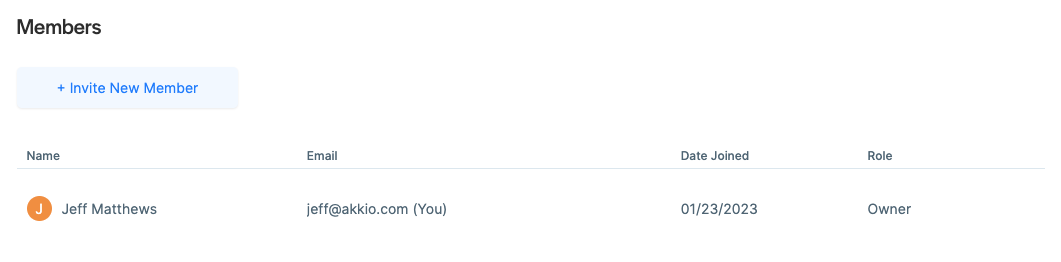
The Members section shows all the team members, including their names, emails, dates they joined, and role (owner, admin, or member).
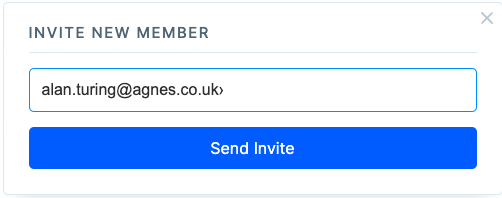
One of the best ways to explore collaboration in Akkio is by inviting members to your organization and creating teams. You can do so simply by entering their email, and they’ll be added as soon as they accept the email invite.
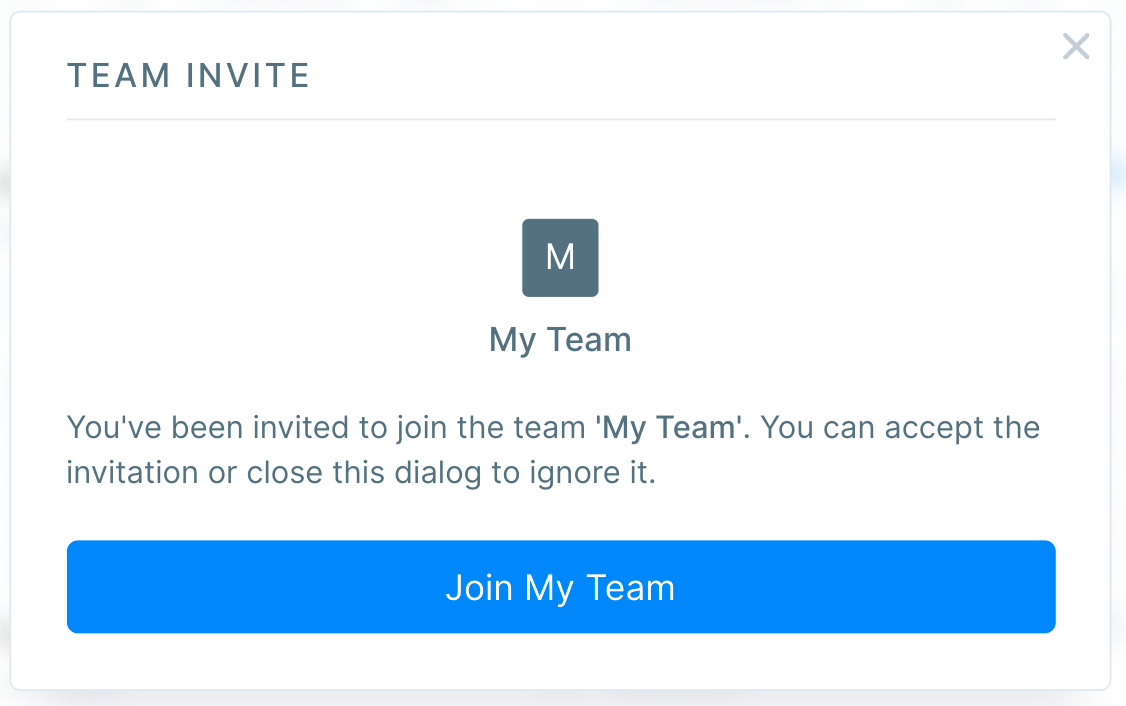
The person you invite will receive an email and the below prompt upon clicking “accept invite.”
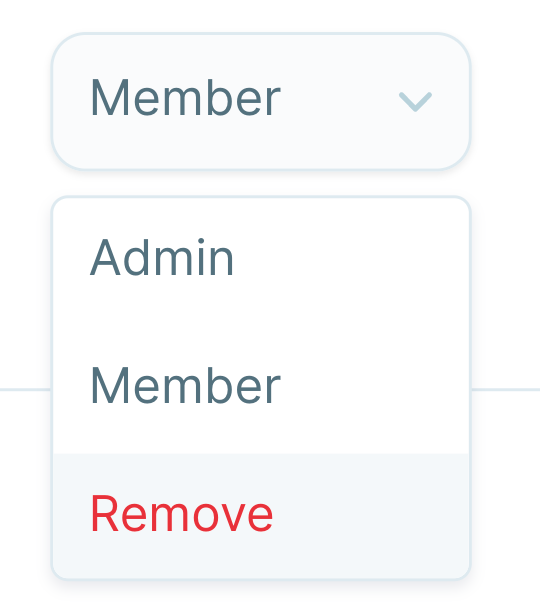
As an Owner, you can remove a member at any time in this section or upgrade their role to “Admin” instead of “Member.”
For more details on the different Member roles, see our [Role Based Access Control](https://docs.akkio.com/akkio-docs/settings/role-based-access-control) page.
### **API Keys**
The API keys section gives the API key for the current team, which is used for the Akkio API. You can copy-and-paste this API key to authenticate any workflows or integrations that require it.
---
# Agent Instructions
This documentation is published with GitBook. GitBook is the documentation platform designed so that both humans and AI agents can read, navigate, and reason over technical content effectively. Learn more at gitbook.com.
## Querying This Documentation
If you need additional information that is not directly available in this page, you can query the documentation by asking a question.
Perform an HTTP GET request on the following URL with the `ask` and `goal` query parameters:
```
GET https://docs.akkio.com/akkio-docs/settings/team-settings.md?ask=&goal=
```
`ask` is the immediate question: it should be specific, self-contained, and written in natural language.
`goal` is what the user is ultimately trying to achieve, the reason they need the answer. Sharing it helps GitBook give you a better, more relevant answer. A goal is most helpful when it describes the outcome the user wants rather than restating the question. For example, with `ask=how do I create an API token`, a goal like `automate deployments from our CI pipeline` lets GitBook tailor the answer to that use case.
The response will contain a direct answer to the question and relevant excerpts and sources from the documentation.
Use this mechanism when the answer is not explicitly present in the current page, you need clarification or additional context, or you want to retrieve related documentation sections.
.png?alt=media&token=cf3ea21e-5762-4a41-a847-9b0fb9370152)
 As an Owner, you can remove a member at any time in this section or upgrade their role to “Admin” instead of “Member.”
 For more details on the different Member roles, see our [Role Based Access Control](https://docs.akkio.com/akkio-docs/settings/role-based-access-control) page.
### **API Keys**
The API keys section gives the API key for the current team, which is used for the Akkio API. You can copy-and-paste this API key to authenticate any workflows or integrations that require it.
For more details on the different Member roles, see our [Role Based Access Control](https://docs.akkio.com/akkio-docs/settings/role-based-access-control) page.
### **API Keys**
The API keys section gives the API key for the current team, which is used for the Akkio API. You can copy-and-paste this API key to authenticate any workflows or integrations that require it.
-edit.png?alt=media&token=49263873-fd83-40df-be8f-d1a3fccc3512) ---
# Agent Instructions
This documentation is published with GitBook. GitBook is the documentation platform designed so that both humans and AI agents can read, navigate, and reason over technical content effectively. Learn more at gitbook.com.
## Querying This Documentation
If you need additional information that is not directly available in this page, you can query the documentation by asking a question.
Perform an HTTP GET request on the following URL with the `ask` and `goal` query parameters:
```
GET https://docs.akkio.com/akkio-docs/settings/team-settings.md?ask=
---
# Agent Instructions
This documentation is published with GitBook. GitBook is the documentation platform designed so that both humans and AI agents can read, navigate, and reason over technical content effectively. Learn more at gitbook.com.
## Querying This Documentation
If you need additional information that is not directly available in this page, you can query the documentation by asking a question.
Perform an HTTP GET request on the following URL with the `ask` and `goal` query parameters:
```
GET https://docs.akkio.com/akkio-docs/settings/team-settings.md?ask=